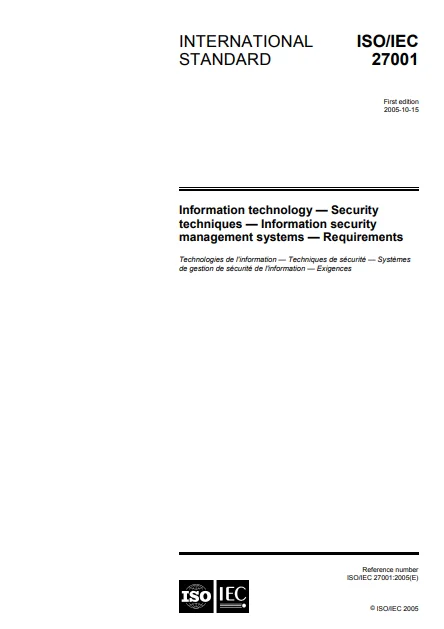
International General

ISO 27001 Information Security Management

ISO 27001 is the internationally recognized standard for establishing, implementing, maintaining, and continuously improving an information security management system (ISMS). ATEK's integrated platform provides the technical controls, documentation capabilities, and monitoring infrastructure needed to build and maintain a robust, audit-ready information security management system.

Authority: International Organization for Standardization (ISO)

Why Choose ATEK for ISO 27001 Compliance

Reduce Security Risk

Systematic risk assessment and treatment controls help identify and mitigate information security threats before they impact your organization.

Demonstrate Compliance

Comprehensive audit trails, automated documentation, and performance metrics provide clear evidence of ISO 27001 compliance for auditors and stakeholders.

Protect Data Assets

Advanced encryption, access controls, and monitoring ensure your critical information assets remain confidential, integral, and available.

Build Customer Trust

ISO 27001 certification demonstrates commitment to information security and builds confidence with customers, partners, and regulators.

Streamline Audits

Automated documentation and real-time dashboards make internal and external audit processes faster and more efficient.

ISO 27001 Requirements

Key compliance requirements and how ATEK addresses each one.

Requirement Description ATEK Solution
4.1
Understanding the Organization and Its Context
The organization must determine external and internal issues relevant to its purpose and that affect its ability to achieve intended information security outcomes.
Security Risk Context Analysis
ATEK's platform provides comprehensive visibility into information security context, allowing organizations to understand and document external and internal issues affecting their information security posture.
5.1
Leadership and Commitment
Top management must demonstrate commitment to the information security management system by establishing policies, ensuring resource allocation, and communicating the importance of compliance.
Leadership Dashboard and Reporting
Executive dashboards and customizable reports demonstrate top management commitment to information security through clear KPI tracking and compliance metrics.
6.1
Risk Assessment
The organization must establish, implement, and maintain processes for assessing information security risks including identification, analysis, and evaluation.
Integrated Risk Assessment Framework
ATEK provides structured tools for conducting systematic information security risk assessments, including threat identification, vulnerability analysis, and risk scoring.
6.2
Risk Treatment
The organization must determine options for treating risks and implement risk treatment plans to address identified risks.
Risk Treatment Planning and Tracking
Platform supports development and monitoring of risk treatment plans with clear ownership, timelines, and status tracking to ensure implementation.
8.2
Access Control and Authentication
The organization must implement controls to ensure only authorized users can access information assets through appropriate authentication and authorization mechanisms.
Multi-Factor Authentication and RBAC
ATEK implements role-based access controls with multi-factor authentication, ensuring only authorized personnel can access sensitive information and functions.
8.3
Cryptography
The organization must protect the confidentiality, integrity, and authenticity of information through appropriate encryption and cryptographic controls.
End-to-End Encryption
All data in transit and at rest is protected using industry-standard encryption protocols (TLS 1.3, AES-256), ensuring confidentiality and integrity of information assets.
8.4
Physical and Environmental Security
The organization must protect information processing facilities from physical threats and environmental hazards.
Secure Infrastructure and Monitoring
ATEK operates on SOC 2 compliant cloud infrastructure with continuous environmental monitoring, redundancy, and disaster recovery capabilities.
9.4
Audit Trails and Logging
The organization must monitor, record, and protect information processing activities through comprehensive logging of user activities and system events.
Immutable Audit Trails
Every system action and data access is logged with timestamps, user identification, and cannot be modified or deleted, providing complete forensic capabilities.
10.1
Performance Evaluation
The organization must monitor, measure, analyze, and evaluate the performance of the information security management system.
Performance Metrics and Dashboards
Real-time dashboards track key security metrics including access attempts, anomalies, incident response times, and compliance status.
10.3
Continual Improvement
The organization must continually improve the suitability, adequacy, and effectiveness of the information security management system.
Continuous Improvement Tracking
ATEK supports systematic capture of improvement opportunities, lessons learned, and implementation of enhancements to the information security management system.

Understanding ISO 27001

ISO 27001 is the international standard for information security management systems, first published in 2005 and substantially revised in 2022. It provides a comprehensive framework for organizations to establish, implement, maintain, and continuously improve their approach to protecting information assets.

The ISO 27001 Framework

The standard follows the Plan-Do-Check-Act (PDCA) model:

  • Plan: Assess risks, define objectives, establish policies
  • Do: Implement controls, raise awareness, manage operations
  • Check: Monitor performance, conduct audits, measure effectiveness
  • Act: Take corrective actions, drive continuous improvement

Key Components

Information Security Context: Understanding external and internal factors that affect your organization’s ability to protect information.

Leadership Commitment: Top management must demonstrate commitment through policy setting, resource allocation, and active involvement in the ISMS.

Risk Management: Systematic identification, analysis, and treatment of information security risks through documented processes.

Operational Controls: Implementation of specific technical and organizational measures to address identified risks across 4 control themes.

Performance Evaluation: Continuous monitoring and measurement of ISMS effectiveness through metrics and internal audits.

Core Control Themes

ISO 27001:2022 addresses information security across 4 control themes containing 93 controls:

  1. Organizational Controls - Policies, procedures, governance, and supplier relations
  2. People Controls - Personnel security, awareness, and training
  3. Physical Controls - Facility security, equipment protection, and environmental safeguards
  4. Technological Controls - Access control, cryptography, operations security, and secure development

How ATEK Supports ISO 27001 Compliance

ATEK’s integrated platform provides the technical infrastructure and monitoring capabilities needed to implement and maintain ISO 27001 requirements.

Risk Assessment and Management

ATEK provides structured frameworks for conducting systematic information security risk assessments:

  • Threat and Vulnerability Identification: Tools to catalog and analyze potential security threats
  • Risk Analysis: Scoring and prioritization of identified risks
  • Treatment Planning: Development and tracking of risk mitigation strategies
  • Monitoring and Review: Continuous evaluation of risk treatment effectiveness

Access Control and Authentication

Robust controls ensure only authorized personnel can access information:

  • Multi-Factor Authentication: MFA options including TOTP, SMS, and hardware keys
  • Role-Based Access Control: Granular permissions based on organizational roles
  • Principle of Least Privilege: Users receive only necessary permissions
  • Access Reviews: Periodic verification that access remains appropriate

Data Protection and Encryption

All information is protected using industry-standard cryptography:

  • Data in Transit: TLS 1.3 encryption for all network communications
  • Data at Rest: AES-256 encryption for stored information
  • Key Management: Secure generation, storage, and rotation of encryption keys
  • Cryptographic Agility: Support for emerging encryption standards

Audit Trails and Monitoring

Comprehensive logging enables forensic analysis and compliance verification:

  • Activity Logging: Every user action and system event is recorded
  • Immutable Records: Logs cannot be modified or deleted
  • Timestamped Events: Precise timing of all activities
  • Forensic Capability: Complete audit trail for investigation and compliance

Infrastructure Security

ATEK operates on SOC 2 compliant cloud infrastructure:

  • Data Center Redundancy: Multi-region deployment for business continuity
  • Environmental Monitoring: Continuous monitoring of facilities for security
  • Physical Security: Access controls and surveillance at all facilities
  • Disaster Recovery: Automated backups and recovery procedures

Performance Measurement

Real-time dashboards track key security metrics:

  • Security KPIs: Access attempts, incidents, remediation times
  • Compliance Status: Control implementation and effectiveness
  • Risk Metrics: Residual risk levels and trends
  • Audit Readiness: Documentation completeness and control evidence

Implementation Roadmap

Phase 1: Assessment (Weeks 1-4)

  • Determine scope of ISMS
  • Conduct initial risk assessment
  • Document current information security practices
  • Identify gaps against ISO 27001 requirements

Phase 2: Planning (Weeks 5-8)

  • Develop information security policies
  • Create risk treatment plan
  • Establish roles and responsibilities
  • Plan control implementation

Phase 3: Implementation (Weeks 9-20)

  • Deploy technical controls (encryption, access control, monitoring)
  • Implement organizational procedures
  • Conduct staff awareness training
  • Establish incident response procedures

Phase 4: Monitoring (Weeks 21-24)

  • Establish performance metrics
  • Conduct internal audits
  • Review effectiveness of controls
  • Document improvement actions

Phase 5: Certification (Weeks 25+)

  • Prepare for external audit
  • Conduct management review
  • Undergo certification audit
  • Achieve ISO 27001 certification

Best Practices for ISO 27001 Success

Secure Executive Support: Ensure top management understands and supports the ISMS initiative.

Define Clear Scope: Clearly document which assets, processes, and locations are within the ISMS scope.

Conduct Thorough Risk Assessment: Take time to properly identify and analyze information security risks.

Select Appropriate Controls: Choose controls that are proportionate to your identified risks.

Document Everything: Maintain clear documentation of policies, procedures, risk assessments, and control effectiveness.

Provide Training: Ensure all staff understand their information security responsibilities.

Monitor Continuously: Use dashboards and metrics to track ISMS performance.

Review Regularly: Conduct periodic management reviews to assess ISMS effectiveness and drive improvement.

Industry-Specific Considerations

Healthcare

Healthcare organizations must protect patient data privacy and ensure data availability for patient care. ISO 27001 complements HIPAA and other healthcare regulations by providing comprehensive information security management.

Financial Services

Financial institutions face sophisticated cyber threats and strict regulatory requirements. ISO 27001 provides the framework for implementing robust controls to protect customer financial data and ensure regulatory compliance.

Technology Companies

Technology organizations need to protect intellectual property, source code, and customer data. ISO 27001 provides systematic protection of these critical assets while enabling secure product development.

All Industries

Regardless of industry, organizations that handle customer data, proprietary information, or regulated data can benefit from ISO 27001’s comprehensive approach to information security management.

Next Steps

  1. Assess Your Current State: Evaluate your organization’s current information security practices against ISO 27001 requirements
  2. Identify Gaps: Document areas where controls need to be implemented or improved
  3. Plan Implementation: Develop a roadmap for achieving compliance
  4. Deploy Controls: Implement technical and organizational controls systematically
  5. Monitor Performance: Track compliance metrics and control effectiveness
  6. Pursue Certification: Engage a qualified auditor for external certification

ATEK provides the platform infrastructure and tools needed to successfully implement and maintain ISO 27001 compliance across all these phases.

ISO 27001 FAQs

What is ISO 27001?

ISO 27001 is the international standard that specifies requirements for establishing, implementing, maintaining, and continuously improving an information security management system (ISMS). It defines the controls and processes organizations must implement to protect information assets from confidentiality, integrity, and availability threats.

Who needs ISO 27001 certification?

ISO 27001 is applicable to organizations of all sizes and industries that handle sensitive information. It's particularly important for technology companies, healthcare providers, financial institutions, and any organization that needs to protect customer data, intellectual property, or regulated information.

What is the relationship between ISO 27001 and ISO 27002?

ISO 27002 provides implementation guidance and best practices for the controls outlined in ISO 27001. While ISO 27001 defines the requirements for an ISMS, ISO 27002 provides detailed recommendations for implementing the 4 control themes (Organizational, People, Physical, and Technological).

How does ATEK support ISO 27001 implementation?

ATEK provides the technical infrastructure and monitoring capabilities needed to implement ISO 27001 requirements, including access controls, encryption, audit trails, risk assessment tools, and performance monitoring dashboards. The platform helps organizations establish and maintain an audit-ready ISMS.

What is an information security management system (ISMS)?

An ISMS is a systematic approach to managing sensitive company information so it remains secure and protected. It includes people, processes, and technology to identify, assess, and mitigate information security risks and ensure continuous improvement.

How often must we conduct risk assessments?

ISO 27001 requires risk assessments to be conducted at planned intervals and when significant changes occur in the organization, technology, or threat landscape. ATEK supports both scheduled and ad-hoc risk assessments with structured frameworks and tracking.

What audit trails and logging must we maintain?

ISO 27001 requires organizations to maintain audit trails that record user activities, access attempts, system events, and changes to information assets. These logs must be protected, retained according to policy, and regularly reviewed for security incidents.

Can ATEK integrate with our existing security tools?

Yes, ATEK provides API integration capabilities that allow connection to other security tools, SIEM platforms, and enterprise systems, creating a unified view of your information security posture.

Need Help with ISO 27001 Compliance?

Our team of compliance experts can help you implement monitoring solutions that meet ISO 27001 requirements. Contact us for a consultation or demo.

Customized compliance assessment for your facility

Validation documentation packages (IQ/OQ/PQ)

Expert support for audits and inspections

Speak with a Compliance Expert

Our team is available to discuss your specific ISO 27001 compliance requirements.

compliance@atek.io

Get in Touch

Ready to Simplify ISO 27001 Compliance?

Join organizations that trust ATEK to maintain compliance with continuous environmental monitoring.