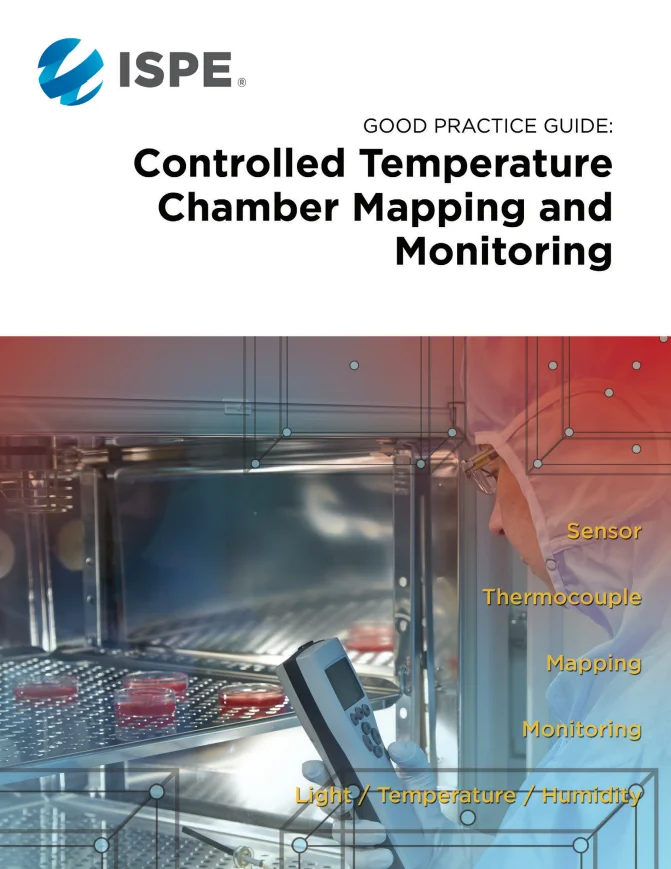
Understanding ISPE Temperature Chamber Mapping
The ISPE Good Practice Guide for Controlled Temperature Chamber Mapping provides industry-accepted methodology for demonstrating that temperature-controlled chambers maintain adequate uniformity to protect product quality. Temperature mapping is a critical validation activity for pharmaceutical manufacturers, biotechnology companies, and logistics providers.
Purpose of Temperature Mapping
Temperature mapping studies serve several critical purposes:
- Demonstrate Compliance: Verify that chambers meet regulatory requirements for temperature control and uniformity
- Identify Problem Areas: Locate temperature gradients, dead zones, or areas requiring remediation
- Establish Operating Parameters: Define safe operating ranges and alarm setpoints
- Support Validation: Provide data for Installation and Operational Qualification protocols
- Continuous Verification: Periodic re-mapping confirms ongoing chamber performance
Key Principles of Effective Mapping Studies
Comprehensive Protocol Development
Before conducting a mapping study, a detailed protocol must be developed that includes:
Study Objectives: Clearly state what the mapping study will demonstrate, such as maintaining ±2°C uniformity across the chamber.
Methodology: Document sensor types, placement strategy, data collection intervals, duration, and both unloaded and loaded conditions to be tested.
Acceptance Criteria: Define specific temperature uniformity limits acceptable for the application, typically expressed as either a range from the setpoint (e.g., ±3°C) or as standard deviation values.
Reporting Requirements: Specify how data will be analyzed, presented, and what documentation will be retained.
Strategic Sensor Placement
The location of temperature sensors is critical to identifying true temperature variation throughout the chamber:
Grid Pattern Approach: Position sensors in a systematic grid pattern covering the chamber in three dimensions - height, width, and depth. This ensures coverage of all chamber zones.
Hot and Cold Spot Identification: Place additional sensors in areas most likely to experience temperature variations based on airflow patterns, location of air returns, and door positions.
Corner and Edge Locations: Sensors positioned near corners, walls, and air inlets/returns capture boundary conditions where temperature variations are most pronounced.
Airflow Considerations: Account for the chamber’s HVAC system design and airflow patterns when positioning sensors to ensure representative data collection.
Dual-Condition Study Design
Comprehensive mapping includes studies under different operational conditions:
Unloaded Chamber: Operating with an empty chamber provides baseline data on inherent temperature uniformity without the thermal effects of product.
Loaded Chamber: Operating with representative product load demonstrates real-world conditions where product mass and thermal properties affect temperature distribution.
Multiple Load Configurations: For chambers storing diverse products or using different shelf configurations, mapping may include multiple load scenarios.
Data Collection and Analysis
Modern temperature mapping relies on comprehensive data collection and statistical analysis:
High-Resolution Logging: Data should be recorded at frequent intervals (typically every 15-30 minutes) over extended periods (24-72+ hours) to capture complete chamber behavior.
Statistical Analysis: Data analysis must include mean, standard deviation, minimum, maximum, and temperature uniformity calculations.
Graphical Representation: Temperature profiles over time and spatial distribution maps help visualize uniformity and identify problem areas.
Trend Analysis: Multi-cycle trending shows how the chamber responds to multiple heating and cooling cycles.
ATEK Support for Temperature Mapping
ATEK’s environmental monitoring platform provides comprehensive support for all aspects of ISPE-aligned temperature mapping studies:
Multi-Point Data Collection
Deploy multiple temperature sensors throughout your controlled chamber to capture spatial temperature variations. ATEK’s wireless sensors and data loggers provide flexibility in sensor placement without complex infrastructure modifications.
Automated Data Recording
Continuous 24/7 recording ensures capture of complete operational profiles across extended mapping periods. Automatic data synchronization eliminates manual transcription errors.
Advanced Statistical Analysis
Automated calculation of uniformity metrics, including mean, standard deviation, minimum, maximum, and temperature uniformity bands. Comprehensive reports generate publication-ready analysis.
Customizable Acceptance Criteria
Define acceptance limits specific to your products and applications. ATEK automatically flags data points or periods that fall outside defined criteria for investigation.
Compliant Documentation
All mapping study data, analyses, graphs, and approval records are exportable in formats suitable for regulatory submissions. Complete audit trails document data integrity.
Re-Mapping Management
Track chamber maintenance activities, modifications, and relocations. Automatic alerts trigger when re-mapping criteria are met, ensuring compliance with validation schedules.
Best Practices for Temperature Mapping Studies
Before the Study
- Develop a detailed protocol aligned with ISPE guidelines and your regulatory requirements
- Define acceptance criteria based on product requirements and regulatory expectations
- Calibrate all temperature sensors before the study begins
- Brief all personnel on data collection procedures and safety protocols
- Review chamber maintenance history to identify any issues that might affect results
During the Study
- Maintain continuous monitoring without interruption
- Document any deviations, alarms, or unusual chamber behavior
- Record environmental conditions (ambient temperature, humidity) that might affect results
- Ensure door seals are intact and chamber is not opened unnecessarily
- Maintain both unloaded and loaded test conditions as planned
After the Study
- Verify data integrity and completeness
- Perform comprehensive statistical analysis
- Identify and investigate any temperature excursions
- Document conclusions and recommendations
- Obtain required approvals and signatures
- Establish baseline uniformity values for future monitoring
- Retain all raw data and documentation for regulatory inspection
Addressing Temperature Mapping Challenges
Identifying Temperature Gradients
Temperature gradients detected during mapping may indicate:
- Air Intake Issues: Check HVAC filter condition and airflow pathways
- Sensor Problems: Verify sensor calibration and positioning
- Product Load Effects: Confirm load represents actual storage conditions
- Environmental Factors: Check ambient temperature stability and room air conditioning
Remediation Strategies
If temperature uniformity falls outside acceptance criteria:
- Contact the equipment manufacturer for technical support
- Evaluate potential equipment calibration or maintenance issues
- Review airflow patterns and HVAC system performance
- Assess whether operational procedures need adjustment
- Plan corrective actions
- Conduct re-mapping to verify corrective actions were effective
Regulatory Considerations
Temperature mapping studies support compliance with requirements from multiple regulatory bodies:
FDA Guidance: The FDA expects pharmaceutical manufacturers to demonstrate that controlled chambers maintain appropriate temperature uniformity to protect product quality.
EU Annex 11: European regulations require validation of environmental monitoring systems including temperature control devices.
ICH Guidelines: International guidelines require temperature control verification as part of stability study support.
USP Requirements: United States Pharmacopeia standards reference temperature uniformity in controlled chambers used for pharmaceutical storage and testing.
Integrating Mapping with Ongoing Monitoring
Temperature mapping studies establish baseline conditions and acceptance criteria that inform ongoing environmental monitoring:
- Setpoint Establishment: Mapping results guide establishment of appropriate setpoints and alarm thresholds
- Sensor Locations: Permanent monitoring sensors positioned based on mapping study findings ensure representative ongoing data
- Alert Configuration: Acceptance criteria from mapping studies inform automated alert configuration in monitoring systems
- Trend Analysis: Ongoing monitoring tracks deviation from baseline uniformity established in mapping studies
Conclusion
ISPE-aligned temperature chamber mapping is essential for pharmaceutical and biotechnology organizations operating temperature-controlled environments. Comprehensive mapping studies demonstrate regulatory compliance, identify operational issues, and establish baseline conditions for ongoing environmental monitoring. ATEK’s monitoring platform streamlines all aspects of mapping study execution, analysis, and documentation while supporting the comprehensive data integrity and regulatory compliance requirements of modern pharmaceutical operations.