
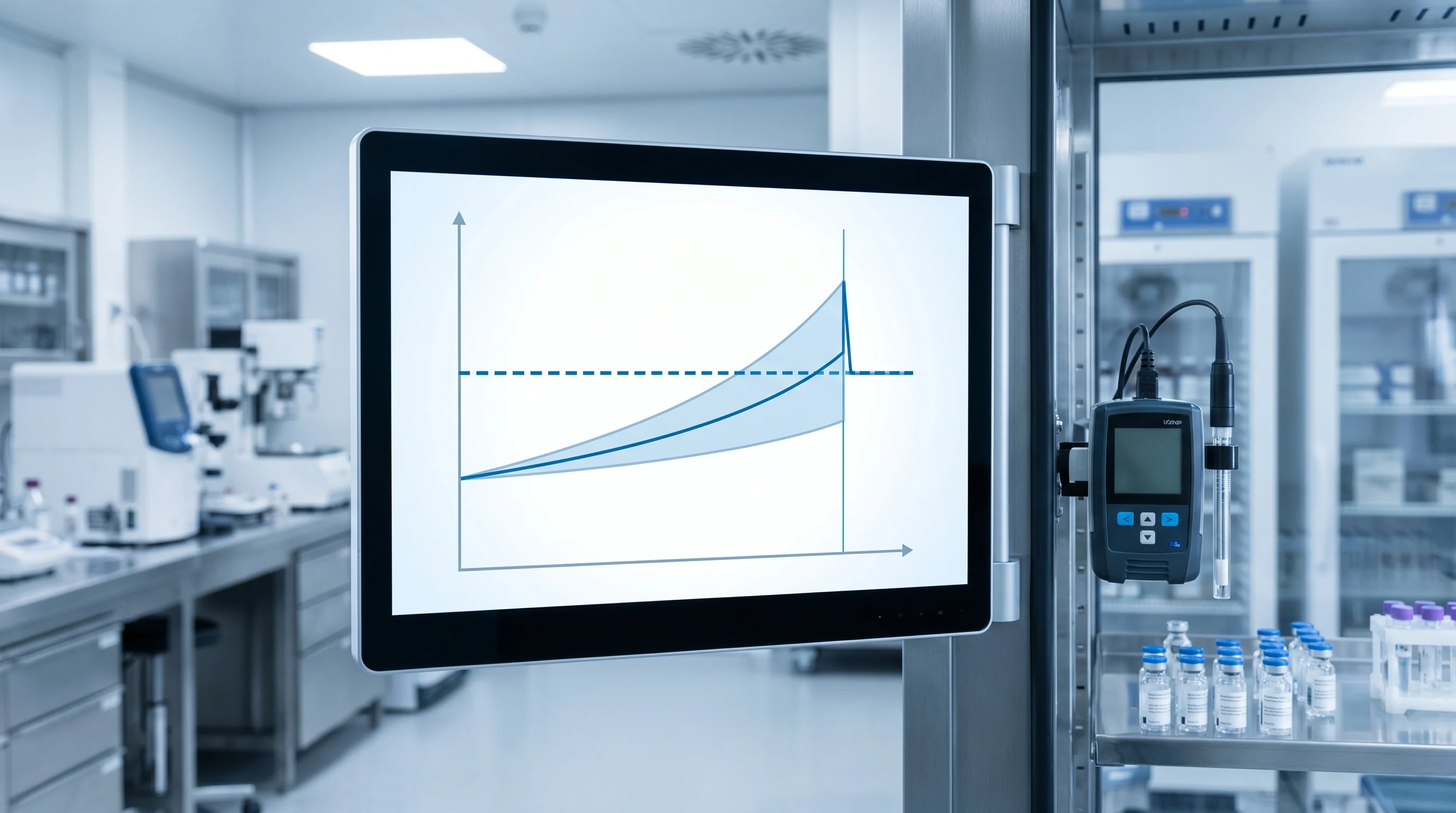
What is Sensor Drift?
Sensor drift is the gradual deviation of a measuring instrument’s output from its true value over time. In temperature and humidity monitoring, this means a sensor might consistently read slightly higher or lower than the actual ambient condition. This slow shift is caused by normal operational wear, environmental exposure, and the natural aging of electronic components.
For laboratories, pharmacies, and biotech facilities relying on continuous environmental monitoring, drift presents a hidden risk. An alarm system might not trigger because the drifting sensor is falsely reporting a safe condition, or conversely, generating false alerts that desensitize staff.
How Calibration Detects Drift
Routine calibration is the primary mechanism for identifying and correcting sensor drift. By comparing a field sensor’s readings against a known, traceable reference standard under controlled conditions, calibration quantifies the exact degree of deviation.
This process serves two critical operational functions:
- Correction: Adjusting the sensor back to accurate baseline performance.
- Documentation: Creating a formal record of the sensor’s state at a specific point in time, which is vital for compliance and audit trails.
Regular calibration intervals are essential because drift is not usually a sudden failure; it is a slow degradation that goes unnoticed without baseline comparison.
Impact Review and Record Confidence
When calibration reveals significant drift, teams must evaluate the impact on historical environmental data. If a sensor drifted outside of its specified tolerance prior to being recalibrated, the integrity of the environmental records during that period is called into question.
A documented impact review should assess:
- The magnitude and direction of the drift.
- The specific timeframe the sensor was operating in a drifted state.
- The potential effect on stored inventory (like vaccines or reagents) or ongoing research.
Caveat: Even if a sensor reports a temperature within the acceptable range (e.g., between 2°C and 8°C), significant uncorrected drift means you cannot confidently prove the actual physical conditions matched the digital record. An auditor will evaluate the continuous accuracy of the data, not just whether the reported numbers stayed within the alert boundaries.