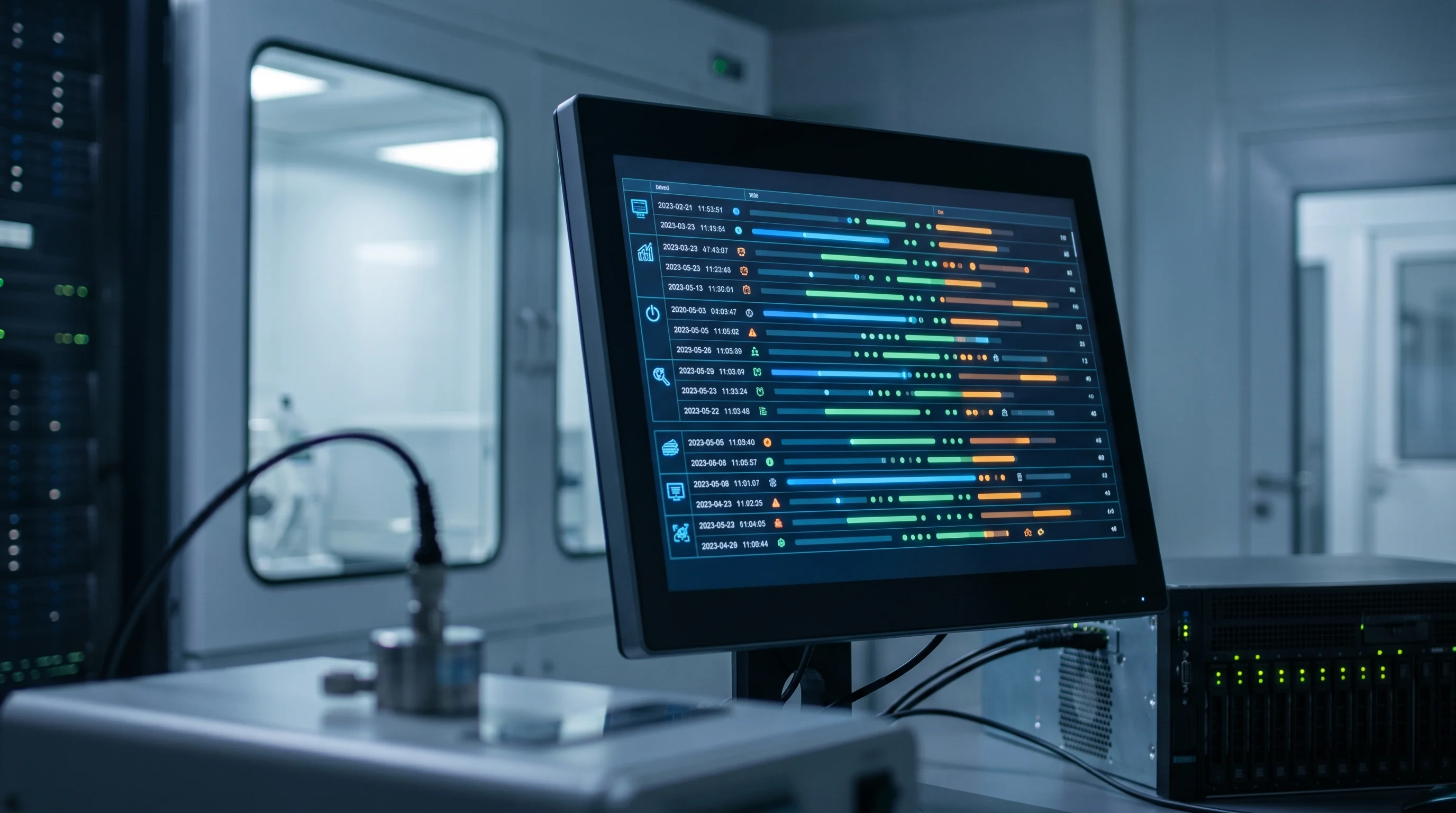

TL;DR: CCAC does not require continuous lux monitoring. It requires cycle monitoring (light on or off at the right time) with alarms. A single light intrusion during the dark phase is enough to invalidate experimental data. For poultry, NFACC adds minimum intensity thresholds. ATEK handles both with schedule-based alarm protocols.
Broken light cycles cost months of research. A rodent exposed to light during its dark phase suffers disrupted metabolism, reproduction, and hormone regulation — invalidating experimental data. The CCAC understood this long before automated monitoring existed. Here is what the guidelines actually require, and why most facilities are measuring the wrong thing.
What CCAC Requires for Light in Animal Facilities
The CCAC (Canadian Council on Animal Care) addresses light in section 12.2 of its Guidelines on Laboratory Animal Facilities (2003, revised 2024), subsection 12.2.1 Photo-intensity. For HVAC and temperature requirements in the same facilities, see our CCAC HVAC Guidelines page.
The core requirement is not a lux threshold. It is cycle consistency:
“Consistency in the diurnal cycle is often critical to reliable research results.” — CCAC Guidelines: Rats (September 2022)
For rodents, acceptable photoperiods are:
- 14 hours light / 10 hours dark (optimal for reproduction)
- 12 hours light / 12 hours dark (acceptable)
- 10 hours light / 14 hours dark (acceptable)
The CCAC is explicit about the consequences of disruption:
“Disruption of the dark phase, even by a very minimal amount of light, can disrupt circadian rhythms of endocrine metabolism and physiology.” — CCAC Guidelines on Laboratory Animal Facilities, section 12.2
“Diurnal light cycles in animal rooms, including the crepuscular periods of dawn and dusk, should be controlled and monitored centrally, with alarms linked to the building automation system.” — CCAC Guidelines on Laboratory Animal Facilities, section 12.2
Does CCAC Require Measuring Lux?
The short answer: no, not for continuous environmental monitoring.
CCAC references 325 lux at 1 m above floor level as a facility design guideline. It acknowledges this may be too bright for rodents, and recommends lower levels by strain:
- Pigmented strains: below 60 lux recommended
- Albino strains: below 20 to 25 lux recommended
These recommendations apply to facility design, meaning luminaire selection and placement. They do not define a compliance threshold for continuous environmental monitoring.
What CCAC explicitly requires is centralized cycle monitoring with alarms on deviation. Compliance depends on the ability to detect and alert on any cycle deviation, not on lux precision.
The Real Question: Is the Light On at the Right Time?
For CCAC compliance in animal facilities, light monitoring answers one question: is light present or absent at the correct point in the cycle?
This binary approach covers the core real-world risks:
- Lights accidentally left on during the dark phase
- Lights turned off prematurely during the light phase
- Automation system failure disrupting the programmed cycle
- Light intrusion from hallways or windows
Are your light cycles monitored 24/7 with alerts? Contact us to assess your facility, or request a demo to see our approach in action.
How ATEK Monitors Light in Animal Facilities
ATEK sensors measure light on a relative scale from 0 to 100%:
- 0%: lights completely off (darkness)
- 100%: lights on at full intensity
This ratio approach is fundamental: lux cannot be negative. An offset-based calibration is incorrect for light sensors because a positive offset applied to a sensor in total darkness produces a non-zero reading at night, making any alert logic impossible to configure correctly.
A 0-100% ratio calibration guarantees that zero always corresponds to darkness. It can also be performed remotely by observing a complete day/night cycle from the platform, with no on-site intervention required.
When Lux Intensity Becomes Relevant
There are cases where precise intensity is a compliance criterion, in addition to cycle monitoring.
Poultry Housing: NFACC Requirements
For poultry housed in research settings, the National Farm Animal Care Council (NFACC) Code of Practice applies alongside CCAC guidelines. It establishes minimum intensity requirements measured at bird level:
| Species | Period | Minimum Intensity |
|---|---|---|
| Broiler chicks | First 3 days | 20 lux |
| Turkey poults | First 3 days | 50 lux |
| Laying hens | Light phase | 10 to 30 lux |
| After day 3 | Light phase | Sufficient to locate feed and water |
The code also specifies that the dark period must not exceed 10% of the light phase intensity. Dark periods must be genuinely dark, not simply dimmed.
These values apply to chickens (Gallus gallus domesticus), turkeys, and laying hens. For Japanese quail (Coturnix japonica), no official Canadian standard specifies a lux threshold. Research protocols typically use 10 to 30 lux, as defined by each institution’s Animal Care Committee (ACC).
Critical point: for poultry, measurement must be taken at bird level, not at a wall-mounted sensor height. Intensity at the sensor position can differ significantly from intensity at floor level depending on room geometry and luminaire type.
Other Cases Where Intensity Matters
- Horticulture and grow-light applications: photosynthesis depends on intensity (in PPFD, µmol/m²/s), not just on cycle
- Photobiology research protocols: some studies require precise irradiance control
For standard CCAC-compliant animal facilities (rodents, rabbits, common laboratory animals), the cycle takes priority over intensity.
How ATEK Manages Light Cycle Alarms
CCAC requires alarms. But a light sensor alarm is only meaningful when the system knows what phase of the cycle it is in.
ATEK supports schedule-based alarm protocols. Two complementary rules define cycle compliance:
- Light phase (e.g., 6:00 to 20:00): an alarm fires if luminosity drops below the threshold — meaning lights turned off unexpectedly during the day
- Dark phase (e.g., 20:00 to 6:00): an alarm fires if luminosity exceeds the threshold — meaning a light intrusion is detected during the night
This mechanism directly satisfies the CCAC requirement: “controlled and monitored centrally, with alarms linked to the building automation system.”
Every event is timestamped and logged, providing the traceability needed for ACC committee reports and CCAC audits. If lights stay on at 2:00 AM, the alarm triggers in real time and the event is recorded with the exact time, room, and duration of the anomaly.
What Your Monitoring Program Must Include
For complete CCAC compliance on light, your monitoring must cover:
- Continuous 24/7 monitoring of light presence and absence in every animal room
- Schedule-based alarm protocols: alarm if light absent during the light phase, alarm if light present during the dark phase
- Timestamped logs of all light events (time, duration, room)
- Traceability sufficient for CCAC audits, ACC committee reports, and institutional inspections
- Sensors calibrated on a ratio basis (0-100%), with no offset
- For facilities housing poultry: sensors positioned at bird level for lux intensity validation against NFACC requirements
Is your facility ready for a CCAC audit? Our animal facility monitoring experts can assess your current coverage and identify gaps. Speak to a specialist or explore our animal research solution.
Frequently Asked Questions
Does CCAC require a specific lux level for monitoring? No. CCAC requires centralized light cycle monitoring with alarms, not a lux threshold in continuous monitoring. Intensity recommendations apply to facility design.
Does a ceiling-mounted light sensor give the right value? For cycle monitoring (on/off), sensor position matters little. For intensity measurement at the animal level, the sensor should be positioned at the animal’s height.
Can an offset be used to calibrate a light sensor? No. Light cannot be negative. A positive offset applied to a zero-reading sensor (lights off) produces a false reading in complete darkness. Ratio calibration (0-100%) is the only correct method.
Which animals are covered by CCAC light requirements? All species covered by CCAC guidelines. Species-specific documents exist for rats, mice, rabbits, swine, non-human primates, and others. Each document specifies recommended photoperiods.
Are requirements different for poultry? Yes. For poultry (chickens, turkeys, laying hens), the NFACC Code of Practice supplements CCAC guidelines and requires minimum intensity thresholds measured at bird level. Values range from 20 lux (broiler chicks, first 3 days) to 50 lux (turkey poults, first 3 days). See the NFACC Poultry Code of Practice.
Can ATEK alarms handle two opposite rules depending on the time of day? Yes. ATEK supports schedule-based alarm protocols. You configure one rule for the light phase (alarm if light turns off) and a separate rule for the dark phase (alarm if light turns on). Both rules apply automatically based on the time of day, with no manual intervention required.
References
| Document | Section |
|---|---|
| CCAC Guidelines on Laboratory Animal Facilities (2024) | Section 12.2 Light |
| CCAC Guidelines: Rats (September 2022) | Photoperiod, intensity |
| CCAC Guidelines: Mice (September 2022) | Photoperiod, intensity |
| NFACC — Code of Practice for Chickens, Turkeys and Hatching Eggs | Light intensity, phases |
| NFACC — Code of Practice for Pullets and Laying Hens | Light intensity |