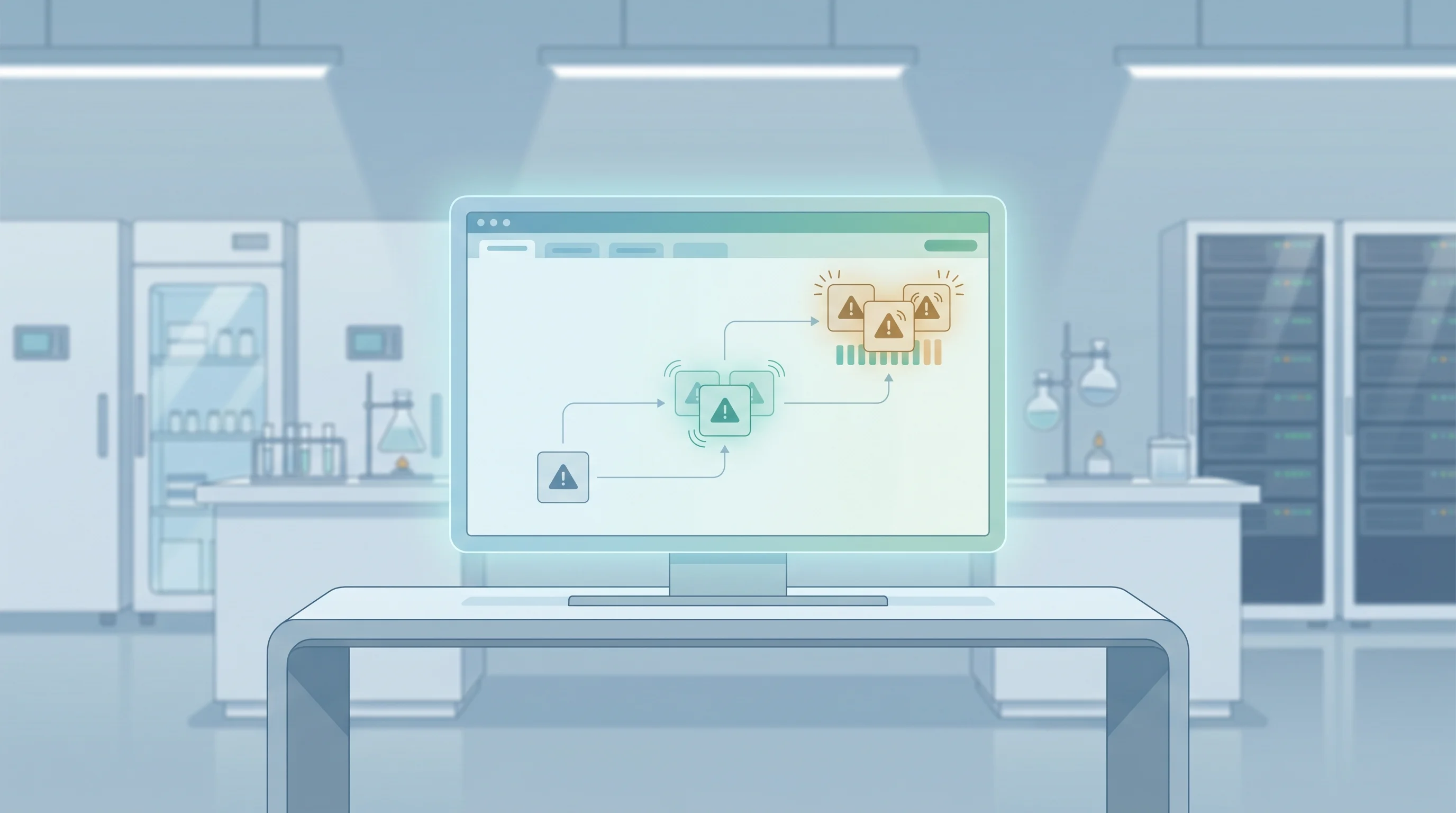

Why Actionable Thresholds Matter
Setting an alarm threshold is not just about entering a number into a system. An actionable threshold reflects the actual operating limits of your process, the response time required to prevent a deviation, and the documented escalation path your team will follow. When configured properly, environmental monitoring systems like those supported by ATEK allow facilities to monitor critical parameters—such as temperature, humidity, differential pressure, CO2, door status, and power availability—with confidence.
Aligning Thresholds with Process Risk
Thresholds should be driven by product stability, regulatory requirements, and operational constraints rather than arbitrary defaults. Before configuring an alert, you need to understand the causal relationship between the parameter and the outcome. For example, if a pharmaceutical product degrades rapidly above a certain temperature, your alert threshold must provide enough lead time for intervention before the product is compromised.
Decision rule: An alert threshold must be set tighter than the critical process limit so that the time required for notification, escalation, and corrective action is always less than the time it takes for the parameter to breach the critical limit.
Key Parameters to Configure
When setting up your environmental monitoring alerts, consider the following parameters based on your operational requirements:
- Temperature & Humidity: Critical for cold chain storage, stability chambers, and cleanroom operations.
- Differential Pressure: Essential for maintaining cleanroom cascades and containment.
- CO2 Levels: Important for incubators and specific biological research applications.
- Door Status: Monitors access to restricted or critical environments.
- Power Availability: Ensures awareness of utility outages impacting continuous monitoring equipment.
Documenting Escalation and Response
A threshold is only as effective as the response it triggers. Every configured alert must have a clear, documented escalation path. This documentation should define who receives the initial notification, the timeframe for acknowledging the alarm, and the specific steps required to investigate and correct the issue. Your quality systems should tie these response protocols directly back to the risk assessment performed during threshold selection.
Common Pitfalls to Avoid
Failure mode: Setting alarm thresholds equal to the absolute maximum or minimum regulatory limit. This leaves zero buffer for the time it takes to receive the alert, investigate the cause, and implement a corrective action. By the time the alert triggers, a deviation has already occurred, and audit readiness is compromised. Always build in an operational safety margin based on your validated response time.