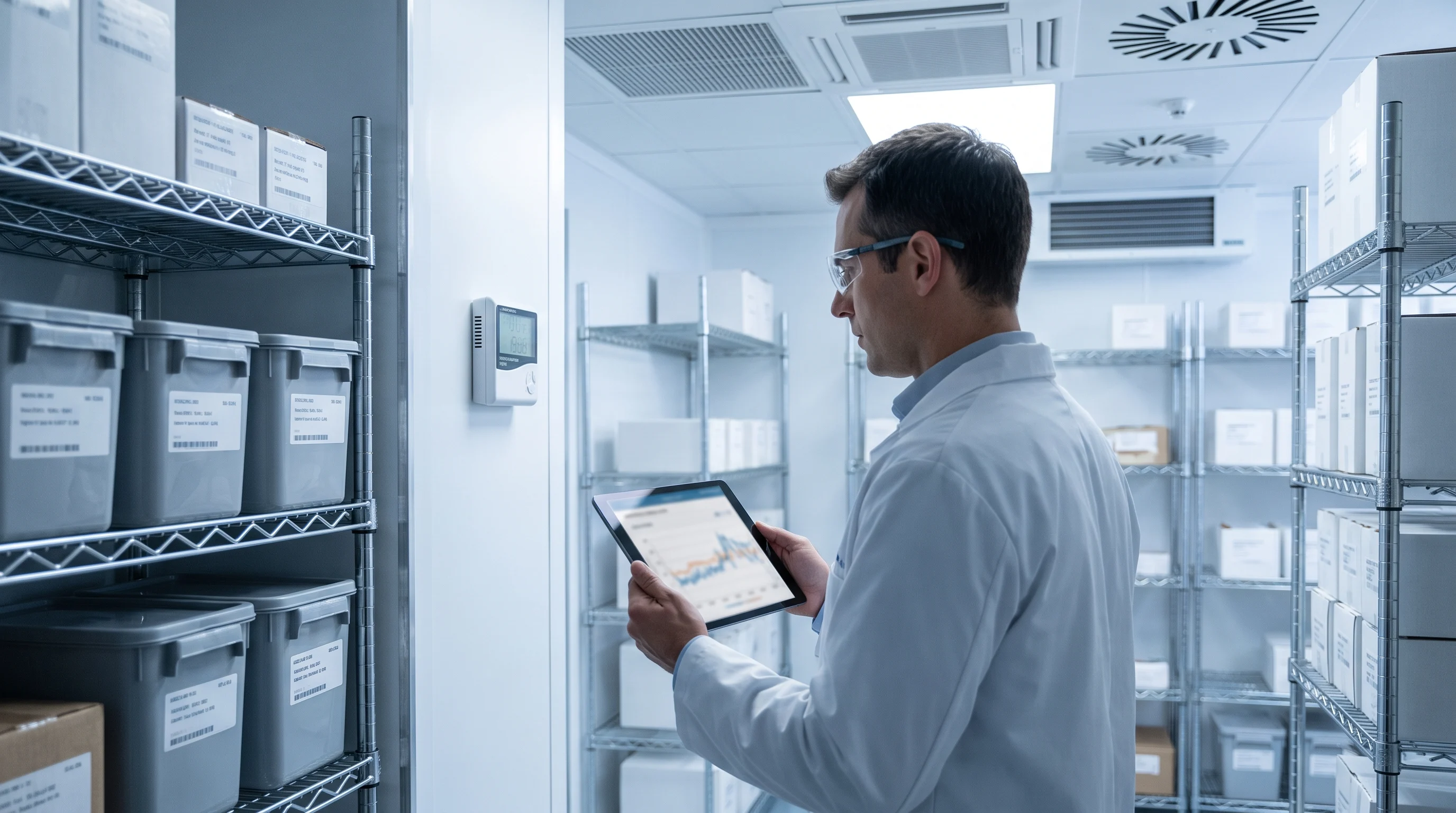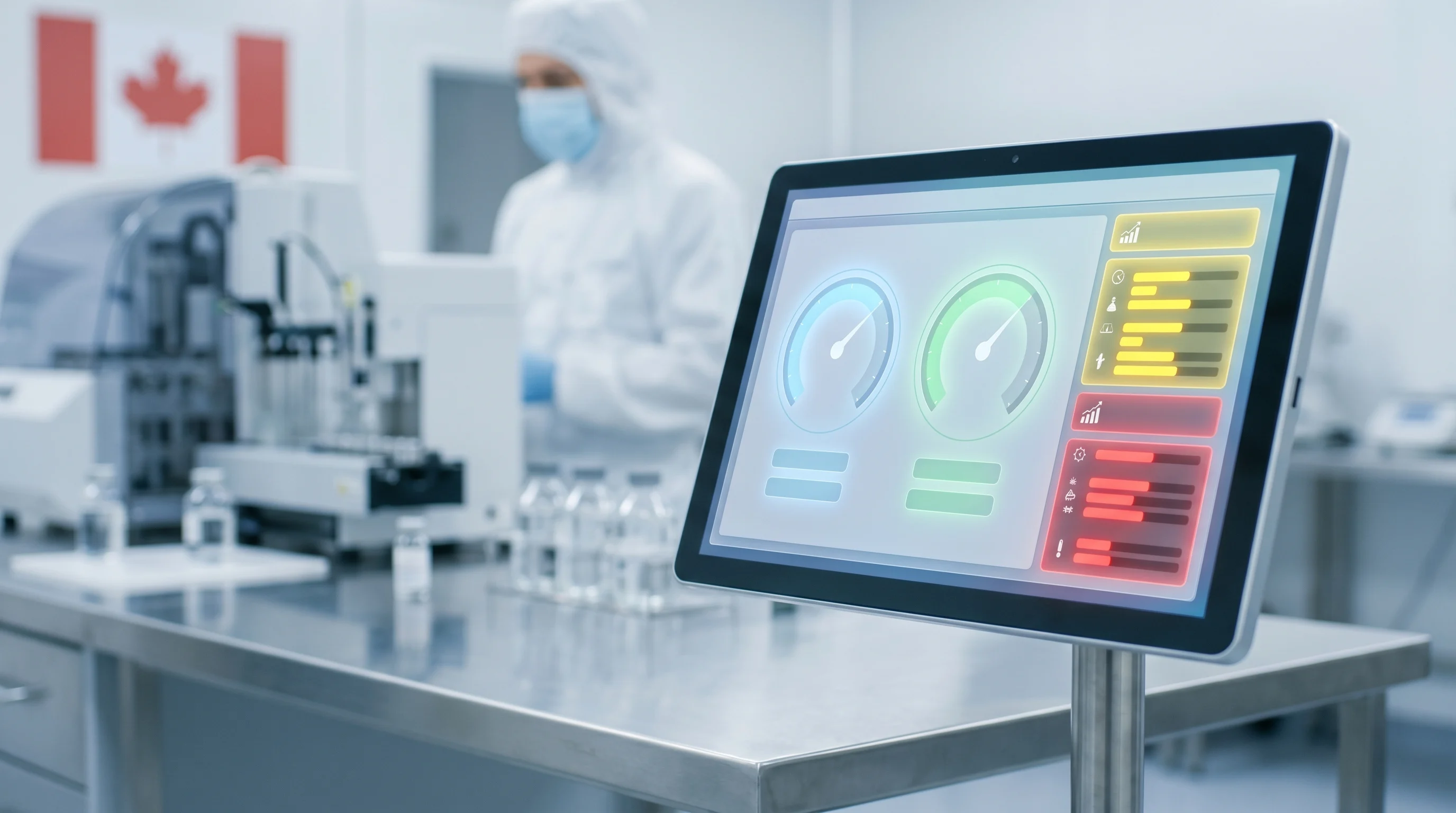
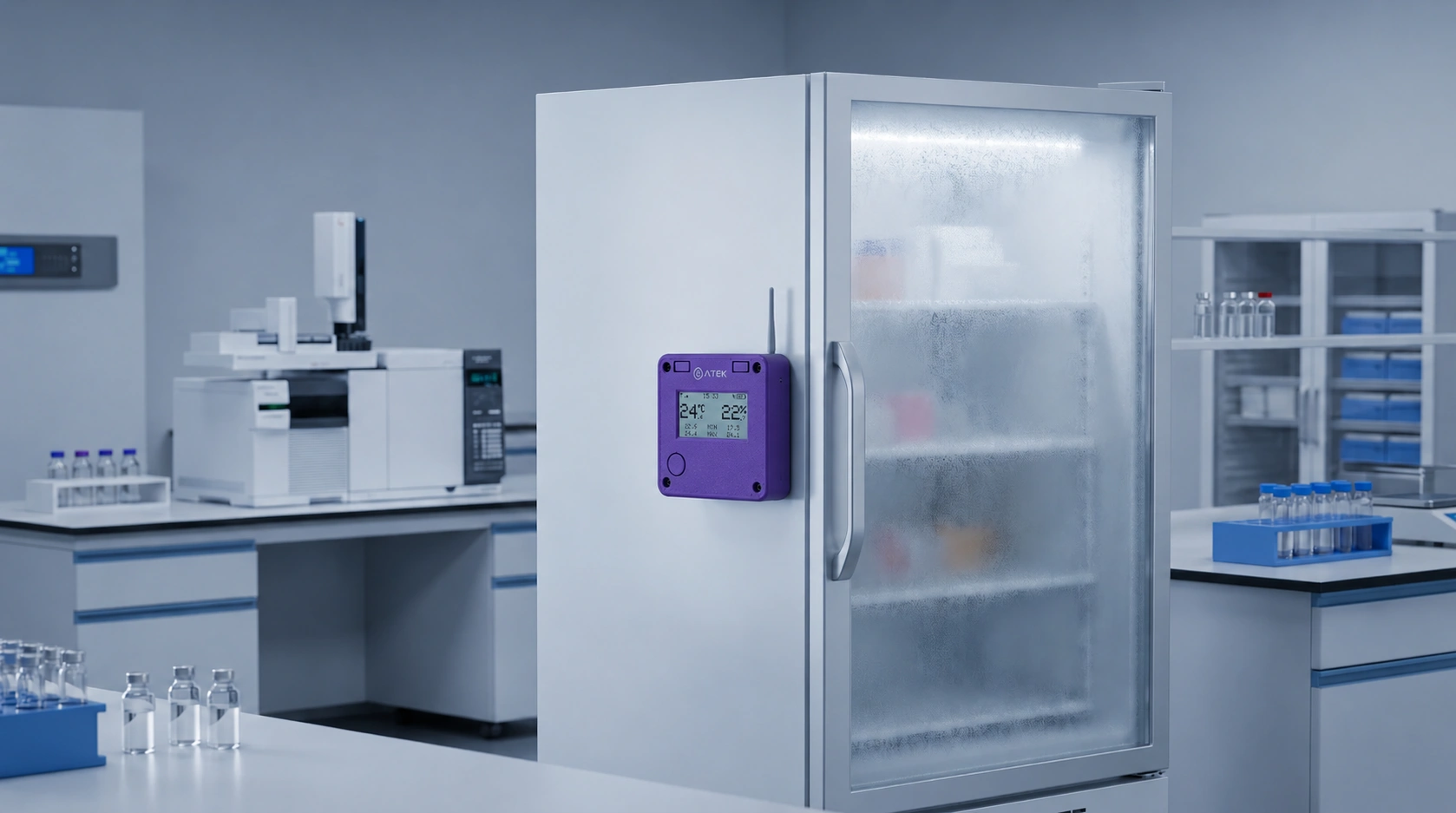
Manual freezer checks fail in a very specific way: they can prove that someone looked at a freezer at a particular moment. They cannot prove what the freezer did between those moments.
That distinction matters in a lab.
If a technician records “-80 C” at 5:00 p.m. and another technician records “-62 C” on Monday morning, the logbook contains two facts. It does not contain the story that operations, QA, or the principal investigator actually needs:
- When did the drift begin?
- How quickly did the temperature move?
- How long was the freezer outside the accepted range?
- Who knew while there was still time to act?
- Was the door left open, the compressor failing, the probe displaced, or the room unusually warm?
- Can the event be reconstructed later without relying on memory?
Manual logs are often treated as monitoring. In practice, they are closer to periodic inspection. That can be useful, but it is a weak primary control for freezers that hold samples, reagents, reference material, vaccines, or regulated product.
The Problem Is Not the Clipboard
It is easy to make this conversation too simple: paper bad, software good.
That misses the operational issue.
A manual freezer check is not automatically careless. Many labs have disciplined people, clear SOPs, and staff who take environmental control seriously. The problem is that manual checking asks humans to cover a gap that the process itself creates.
A person can read a display. A person can initial a line. A person can escalate if the value is already out of range.
But a person cannot observe the freezer while they are away from it. A person cannot receive a warning from a paper logbook at 2:17 a.m. A person cannot reconstruct the shape of an overnight excursion if no data was collected during the excursion.
That is the core failure mode: not laziness, not lack of effort, but missing time.
Illustrative Failure Mode: The Friday Drift
Illustrative example: a lab stores high-value biological samples in an ultra-low temperature freezer. The Friday afternoon check is normal. The display is in range. The logbook is signed. Everyone leaves.
At 6:12 p.m., the freezer starts drifting. Maybe a compressor is degrading. Maybe frost has built up around the seal. Maybe the door was not fully closed after the last access. The exact cause does not matter yet. What matters is that the first visible symptom is slow warming.
By midnight, the freezer is still not in crisis, but the trend is wrong.
By 3:00 a.m., the unit is outside its accepted operating range.
By Monday morning, the manual log shows a clean Friday reading and a bad Monday reading. There may be no defensible record of the hours in between.
That is not just a documentation problem. It is a decision problem. The decision window existed during the weekend, not after Monday morning rounds.
With only manual checks, the lab is forced to investigate backward. Staff have to infer the likely start time, estimate exposure duration, interview whoever last opened the door, decide whether material can be retained, and document a deviation with incomplete evidence.
The failure is not that the Monday reading was late. The failure is that the monitoring process never had a way to notice the event while action could still change the outcome.
What Manual Checks Can Prove
A manual log can still be useful. It can prove that a trained person performed a scheduled inspection. It can catch obvious failures during staffed hours. It can serve as a secondary check against the equipment display or an independent probe.
But the record has a narrow evidentiary value.
It proves that a value was observed at a time.
It does not prove continuous control.
That is where many teams overestimate the strength of their current process. A full logbook feels complete because every line is filled in. But a complete set of scheduled readings is not the same thing as a complete temperature history.
If the freezer is checked twice per day, the logbook may be complete while the environment is effectively unobserved for most of the day.
Why Manual Freezer Logs Break Down
Manual freezer checks usually fail through predictable mechanisms.
Temporal blind spots: A reading is a snapshot. The excursion may happen five minutes after the check and recover before the next one, or it may worsen for hours before anyone knows.
Shift-boundary ambiguity: Responsibility can become unclear around evenings, weekends, holidays, vacations, and handoffs between operations, facilities, and research staff.
No escalation path: A paper log cannot call the on-call person, retry a failed notification, escalate after silence, or show whether someone acknowledged the event.
Weak investigation data: If the only records are the last good check and the first bad check, the investigation starts with a missing timeline.
Transcription and interpretation errors: Staff can read the wrong display, copy the wrong number, skip a line, round a value, or record a corrective action after the fact without enough context.
False confidence from completed paperwork: A filled-in log can make the process look controlled even when the freezer was unobserved for long periods.
These are not rare edge cases. They are the normal behavior of a process that samples reality intermittently.
What Automated Monitoring Changes
Automated monitoring does not remove human judgment. It changes what humans are asked to do.
Instead of asking staff to act as the monitoring system, continuous monitoring lets staff act on the monitoring system.
That is a very different operating model.
1. It Turns Snapshots Into a Temperature History
Continuous freezer monitoring captures readings across nights, weekends, and holidays. The value is not only that there are more data points. The value is that the shape of the event becomes visible.
A slow upward drift looks different from a door-left-open spike. A repeated defrost-related pattern looks different from a failing compressor. A brief recovery looks different from a sustained excursion.
That shape matters because it changes the investigation. Instead of asking “what do we think happened?”, the team can ask “what does the record show happened?”
For a lab manager, that means less guesswork. For QA, it means a cleaner event narrative. For research teams, it means faster decisions about whether material can stay in use, should be quarantined, or needs scientific review.
2. It Shortens the Distance Between Signal and Action
The most important part of freezer monitoring is not the chart. It is the response chain.
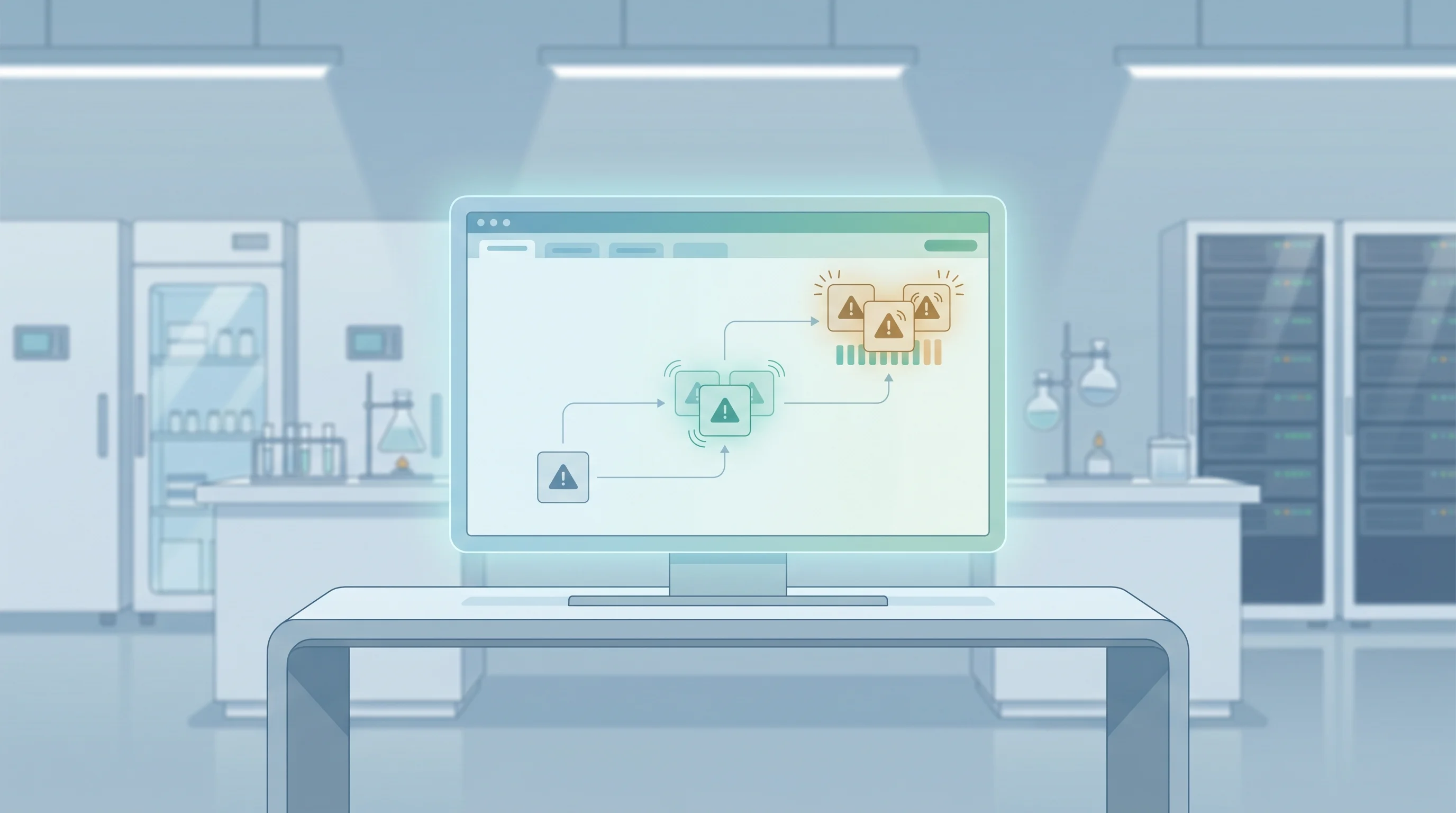
When a freezer starts moving in the wrong direction, the system has to do more than store a reading. It has to evaluate the reading against the right thresholds, notify the right people, and keep escalating if nobody responds.
This is where manual checks are structurally weak. They detect problems only when a person arrives. Automated monitoring can detect and route the problem while the decision window is still open.
For a ULT freezer, that may mean sending an alert when the trend first becomes suspicious, not only when the freezer has already spent hours out of range. For a shared lab, it may mean routing after-hours alarms to an on-call path instead of a generic inbox that nobody checks until morning.
The practical goal is simple: make sure the first accountable human sees the problem early enough to do something useful.
3. It Creates a More Defensible Record
In regulated or quality-controlled environments, the record matters almost as much as the response.
After an excursion, someone will need to answer basic questions:
- What was the original reading?
- What timestamp was attached to it?
- Was the data changed?
- Who received the alert?
- Who acknowledged it?
- What corrective action was taken?
- Can the event be exported and reviewed later?
Manual logs can answer some of these questions if the event happens during a scheduled check and the documentation is disciplined. They struggle when the event happens between checks.
An automated system can preserve timestamped readings, alert history, acknowledgments, corrective notes, and report exports in one chain. For teams evaluating electronic-record requirements such as FDA 21 CFR Part 11, that chain is the point. The value is not only a cleaner report. The value is being able to show that the event was noticed, handled, and preserved in a controlled way.
4. It Makes Slow Failure Visible
Freezer failures are not always dramatic. Sometimes the useful signal appears before the alarm.
A door gasket starts leaking. Ice builds up. The compressor runs harder than usual. The room temperature rises during a heat wave. A unit takes longer to recover after door openings. A freezer that used to sit comfortably below its limit now spends more time near the edge.
Manual checks are not good at seeing this kind of pattern because the readings are too sparse. Continuous monitoring can show drift, recovery behavior, repeated near-misses, and abnormal variability.
That gives operations a chance to intervene before the freezer becomes an emergency.
Manual Checks Still Have a Place
The right conclusion is not “never write anything down manually.”
Manual checks can still support a good control system when they are used for the right job:
- Verifying the local equipment display against the monitoring platform.
- Confirming physical conditions after maintenance or cleaning.
- Documenting a human inspection required by a local SOP.
- Checking probe placement, cable condition, door seals, frost buildup, and freezer access practices.
- Recording corrective actions that require judgment.
The mistake is treating manual checks as the primary monitoring method for material that cannot tolerate an unknown overnight or weekend excursion.
If the lab needs to know what happened between inspections, manual checks are the wrong primary tool.
Manual Checks vs. Automated Monitoring
| Question | Manual freezer checks | Automated freezer monitoring |
|---|---|---|
| What does it prove? | Someone observed a value at a scheduled time. | The system recorded temperature behavior across time. |
| When does it detect problems? | At the next inspection. | When readings or trends cross configured limits. |
| What happens after hours? | Usually nothing until staff return, unless a separate alarm exists. | Alerts can route to email, SMS, app, or escalation paths. |
| How strong is the investigation record? | Strong only at the checked moments. | Stronger across the full event timeline. |
| What is the main risk? | Missing the decision window. | Poor configuration, ignored alerts, or weak escalation design. |
That last row matters. Automation is not magic. A badly configured automated system can still fail operationally. Thresholds can be wrong. Alert fatigue can train people to ignore notifications. Escalation rules can point to the wrong team.
The advantage of automation is that those weaknesses can be designed, tested, and improved. A paper logbook cannot be configured to wake up the right person.
A Simple Decision Rule
Use this rule when evaluating freezer monitoring in a laboratory:
If an unobserved temperature excursion over a night, weekend, or holiday would force you to quarantine material, repeat work, open a deviation, explain missing exposure time, or risk losing irreplaceable samples, manual checks should not be your primary monitoring control.
Use manual checks as secondary verification. Use automated monitoring as the primary signal and response system.
The more valuable the material, the more regulated the environment, and the more painful the investigation would be, the less defensible intermittent checking becomes.
Questions to Ask Before Replacing a Manual Process
Before moving from manual freezer checks to automated monitoring, do not only ask whether the system has sensors and dashboards.
Ask how the decision chain works.
- How often are readings captured, and where is the probe placed?
- What happens if connectivity is interrupted?
- Are original timestamps preserved when data is buffered and replayed?
- Who receives the first alert?
- What happens if that person does not acknowledge it?
- Can alert thresholds differ by freezer type, probe location, and material risk?
- How are corrective actions documented?
- Can QA export the event history without reconstructing it from emails and memory?
- How are calibration, validation, and change control handled?
- Will manual checks continue during the transition, and what role will they play afterward?
These questions are more useful than asking whether the platform is “real time.” Real-time data is valuable only if it leads to timely action and a defensible record.
The Real Shift
Manual freezer monitoring is built around proof of inspection.
Automated freezer monitoring is built around proof of control.
That is the real difference.
For low-risk storage, proof of inspection may be enough. For critical lab freezers, biobank material, regulated product, or research that cannot be recreated, it usually is not.
The freezer does not fail on the schedule printed in the SOP. It fails when a door is left open, a compressor weakens, power fluctuates, a room overheats, or nobody is nearby to notice the first sign of drift.
A good monitoring system exists for that moment.
ATEK helps Canadian life-science and laboratory teams move from intermittent freezer checks to continuous environmental monitoring with alerting, reporting, calibration, and validation support. For related guidance, see our pages on ULT and cryogenic monitoring, validation services, and automated compliance reporting.
Want to review where manual checks are still creating blind spots in your lab? Talk to our team.