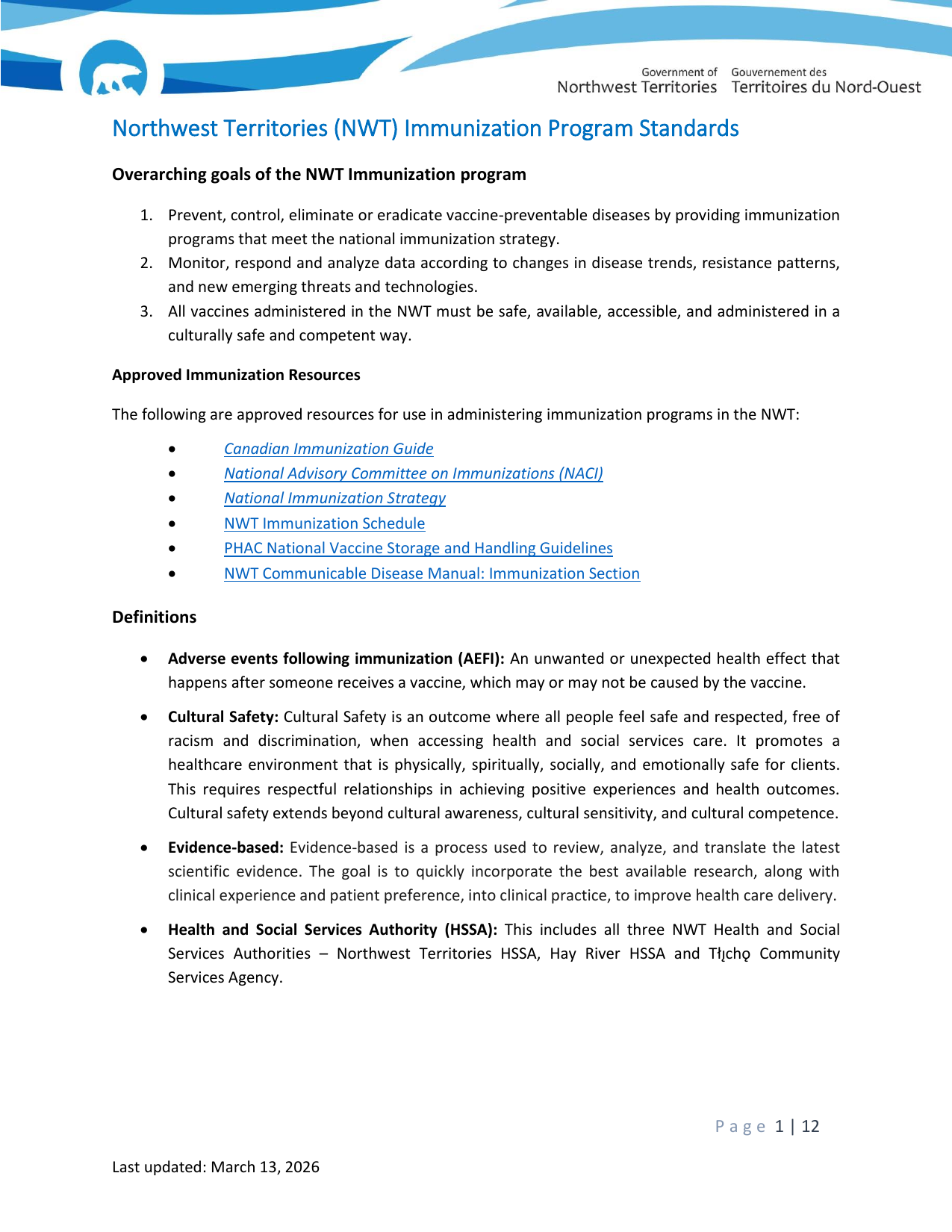
Understanding the Northwest Territories Immunization Program Standards
The Northwest Territories Immunization Program Standards set territorial requirements for safe, accessible, and culturally-safe immunization delivery. Cold chain management is central to these standards, which are grounded in the National Vaccine Storage and Handling Guidelines published by the Public Health Agency of Canada (PHAC) and the recommendations of the National Advisory Committee on Immunization (NACI).
Standards Scope
These standards apply to:
- Community Health Centres
- Public Health Units
- Hospitals
- Pharmacies
- Rural and remote clinics
Key Storage Requirements
NWT cold chain requirements include:
- Temperature Range: +2°C to +8°C at all times
- Continuous Monitoring: Temperatures continuously monitored, recorded, and reviewed
- Dedicated Equipment: Purpose-built or pharmacy-grade vaccine refrigerator, used only for vaccines
- Incident Reporting: Cold chain breaks quarantined, documented, and not used until assessed
- Training: Staff trained in cold chain management and incident response
Cold Chain Break Procedures
When a cold chain incident or break occurs, the NWT standards require providers to:
- Quarantine: Mark affected vaccines “DO NOT USE” and store them separately
- Document: Record the incident, including duration and temperatures reached
- Report: Notify the appropriate authority of the cold chain break
- Assess: Wait for guidance before using or discarding affected vaccines
ATEK automatically captures the exact start and end time of every break, the minimum and maximum temperatures reached, the total duration, and a complete audit trail for review.
How ATEK Supports NWT Compliance
ATEK monitors vaccine storage continuously, sending alerts by SMS, email, and phone call when temperatures approach the +2°C to +8°C limits. This is especially valuable in rural and remote clinics where a delayed response can mean lost inventory. Complete temperature logs and calibration certificates keep providers ready for territorial reviews and aligned with PHAC and NACI guidance.