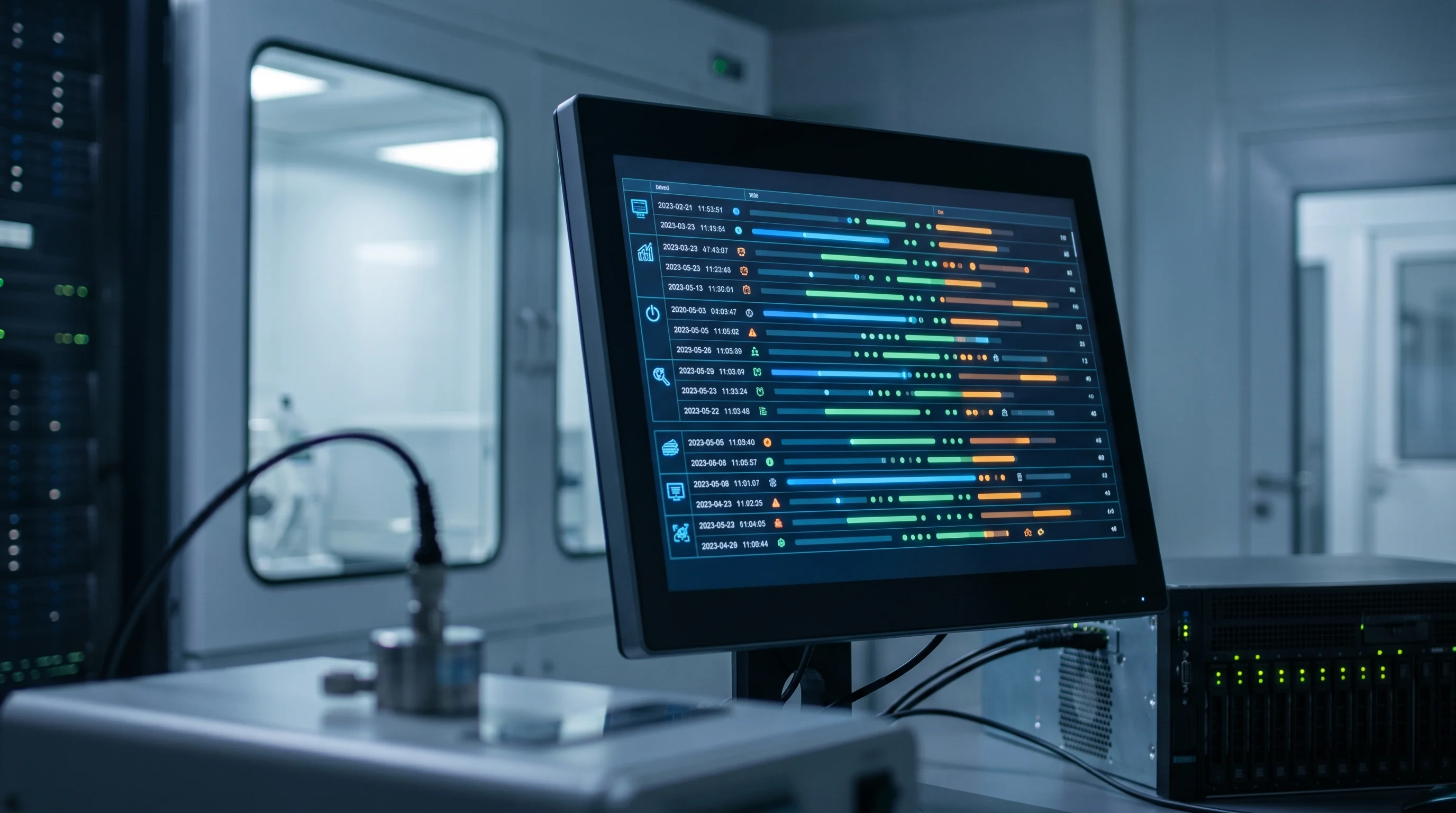
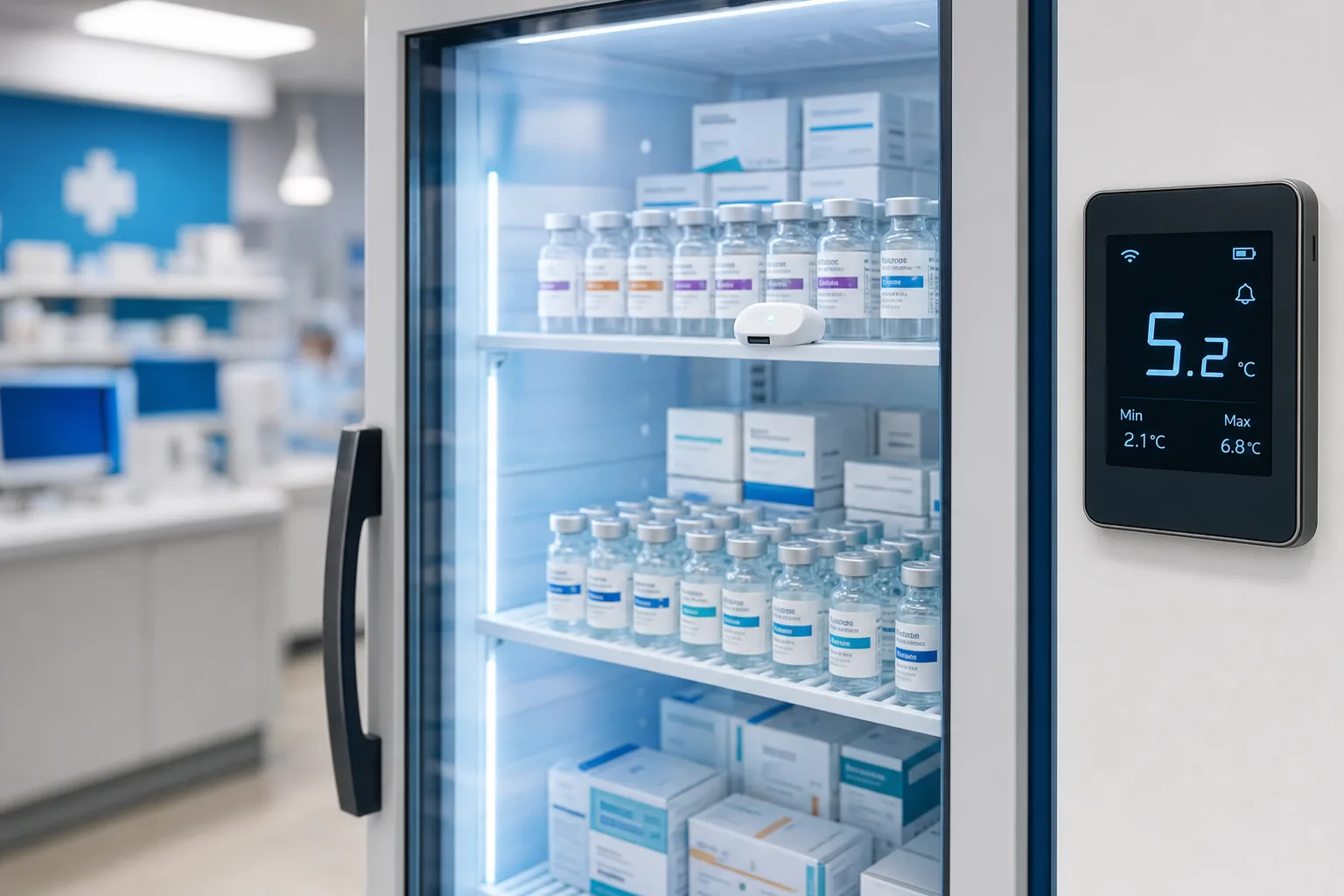
Vaccine refrigerators in Canada must hold +2°C to +8°C, and the temperature must be monitored continuously with a calibrated device, not read once or twice a day off the fridge’s built-in dial. Both the Public Health Agency of Canada (PHAC) National Vaccine Storage and Handling Guidelines and, in Quebec, the Quebec PIQ vaccine storage standards (Protocole d’immunisation du Québec, MSSS) expect a digital data logger with a buffered probe, minimum/maximum readings, a documented cold chain, and a plan to detect and report excursions before vaccines are lost.
If you run a pharmacy, clinic, or a CISSS/CIUSSS site and you are choosing a monitoring system, this guide covers what the rules actually require and how to pick a system that keeps you compliant and audit-ready.
Free download: the one-page Canadian Vaccine Cold Chain Compliance Checklist — every province and territory requirement in a printable list.
What temperature does a vaccine fridge need to be?
Refrigerated vaccines must stay between +2°C and +8°C, with +5°C as the usual target set point. A few minutes outside that band can start to degrade a vaccine, and some excursions are cumulative and irreversible.
| Requirement | Standard |
|---|---|
| Refrigerated vaccine range | +2°C to +8°C |
| Recommended set point | +5°C |
| Reading frequency | Continuous, with min/max reviewed at least daily |
| Thermometer | Digital data logger with a buffered (glycol) probe, calibration certificate |
What does Canada require for vaccine fridge monitoring?
Canadian guidance is consistent nationally and provincially: monitor continuously, use a calibrated probe, and document everything.
PHAC (national) recommends a continuous digital data logger with a buffered probe, a valid certificate of calibration traceable to a national standard, and daily review of minimum/maximum temperatures.
Quebec PIQ (MSSS) goes further on process: each site must maintain the cold chain end to end, keep written procedures, designate a local coordinator responsible for vaccine management, and report every cold chain breach to regional public health for evaluation. The full requirement set is on our Quebec PIQ compliance page.
The common thread across PHAC and PIQ: a fridge dial or a twice-daily manual log is not enough. You need continuous data and a way to act on an excursion at 2 a.m., not discover it the next morning.
Provincial and territorial vaccine storage guidelines across Canada
Beyond the national PHAC guidance, each province and territory publishes its own vaccine storage and cold chain requirements. The +2°C to +8°C range is consistent everywhere, but documentation, reporting, and inspection expectations vary by jurisdiction.
| Jurisdiction | Guideline |
|---|---|
| British Columbia (BCCDC) | BCCDC vaccine cold chain requirements |
| Alberta | Alberta vaccine storage standards |
| Saskatchewan | Saskatchewan vaccine storage guidelines |
| Manitoba | Manitoba cold chain protocol |
| Ontario | Ontario vaccine storage guidelines |
| Quebec (MSSS) | Quebec PIQ vaccine standards |
| New Brunswick | New Brunswick vaccine storage policy |
| Nova Scotia | Nova Scotia vaccine storage guidelines |
| Yukon | Yukon vaccine storage standards |
| Northwest Territories | NWT vaccine storage standards |
| Nunavut | Nunavut vaccine storage guidelines |
| National (PHAC) | PHAC national vaccine storage guidelines |
Whichever province or territory you operate in, the underlying requirement is the same: continuous, calibrated monitoring with an auditable record. A single platform that documents to each of these standards keeps multi-jurisdiction networks consistent.
Why manual temperature logs fail
Manual logs share three weaknesses that show up in every audit:
- Gaps. Overnight, on weekends, and on holidays, no one is reading the thermometer. A failing compressor at 6 p.m. Friday is discovered Monday, after the vaccines are gone.
- No alerting. A paper log records a problem; it does not tell anyone in time to save the product.
- No traceable calibration. A fridge’s built-in display is rarely calibrated to a traceable standard, so its number is not defensible in an audit.
How to choose a vaccine fridge monitoring system
Use this checklist when comparing systems for a pharmacy, clinic, or public health network:
- Continuous monitoring with a buffered probe that reflects vaccine temperature, not air temperature.
- Real-time alerts by SMS, email, and phone call, with escalation so an overnight excursion reaches a human.
- Traceable, accredited calibration (ISO/IEC 17025) with certificates you can hand to an auditor.
- Min/max and full history exportable for PHAC and PIQ documentation.
- Multi-site visibility if you manage more than one fridge or location.
For a full picture of how this maps to a monitoring platform, see our vaccine and cold chain monitoring solution. If you are comparing vendors, our ATEK vs Sensaphone comparison shows the difference between an industrial alarm dialer and a compliance-grade platform.
How ATEK monitors vaccine refrigerators
ATEK provides continuous wireless monitoring of each vaccine refrigerator, with configurable alerts at the +2°C and +8°C boundaries delivered by SMS, email, and automated phone call. Calibration is performed in-house by an A2LA-accredited (ISO/IEC 17025) laboratory, so every certificate is traceable and audit-ready. Minimum/maximum and full temperature history are available for PHAC and Quebec PIQ documentation, and support is staffed 24/7 so an overnight excursion is escalated to a person, not a paper log.
Choosing a monitoring system for your vaccine fridges? Request a demo to see continuous monitoring, alerting, and audit-ready records in action.
Frequently asked questions
What temperature should a vaccine fridge be in Canada? Between +2°C and +8°C, with +5°C as the typical target set point.
Is a fridge thermometer enough for vaccine storage? No. PHAC and Quebec’s PIQ expect a continuous digital data logger with a buffered probe and a traceable calibration certificate, not the fridge’s built-in dial.
What do I do if the cold chain is broken? Isolate the affected vaccines, do not use them, and report the breach to regional public health for evaluation, as required by the Quebec PIQ standards and equivalent provincial guidance.
How often do vaccine fridge temperatures need to be recorded? Continuously, with minimum and maximum temperatures reviewed at least once per working day.
Ready to make your vaccine cold chain audit-proof? Contact ATEK to discuss your sites, or explore the vaccine monitoring solution to see how continuous monitoring fits your pharmacy or clinic.